


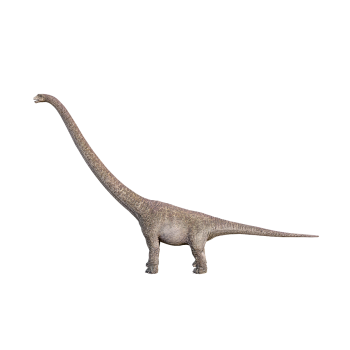
Mamen Xilong GLB model
Mamenchixiosaurus, one of the largest sauropod dinosaurs found in China, lived about 0.16 billion years ago in the Late Jurassic. It is famous for its long neck, which can reach 12.1 meters in length, accounting for almost half of its body length. The head is relatively small, the teeth are thin and stick-shaped, suitable for gnawing high plants. The limbs are strong and strong, the forelimbs are short, the hind limbs are long, and the tail is long and strong, which helps to maintain the balance of the body. Living mainly in plains with lush plants and abundant water, they spend most of their time in lakes and marshes, floating their bulky bodies with the help of water. Foods on young leaves of tall trees and low shrubs.

Spinosaurus 3D Model Animated GLB Model
Spinosaurus was a giant carnivorous dinosaur that lived in the Cretaceous period, about 112,000,000 to 93 million years ago. The body length can reach 15 to 20 meters, weighing about 6.4 to 14 tons. The most notable feature is a row of nerve spines up to 2 meters in length on the back. These nerve spines are formed by the extension of the vertebrae and support a structure similar to a sail. The skull is long and narrow, similar to modern crocodiles, with conical teeth, suitable for catching fish and other small animals. The limbs are short and strong, and the tail is flat and wide, suitable for swimming in the water. It is considered a semi-aquatic predator, feeding mainly on fish, but also hunting other small dinosaurs

Triangle Dragon 3D Animation Model
It is a dinosaur that lived during the Late Cretaceous period, known for its prominent head features, having a huge bony neck shield and three horns, with the largest two horns located above the eyes and a smaller horn located above the nose. Belonging to the Ceratopsidae family, it is a herbivorous dinosaur with a huge body size, measuring about 6 to 9 meters in length and weighing up to several tons. Mainly distributed in today's North America region. Neck shields are believed to be used to protect them from predators and may also be used for display or courtship. Teeth have adapted to grind plants, indicating that they primarily feed on low growing plants. It is one of the important species in paleontological research.
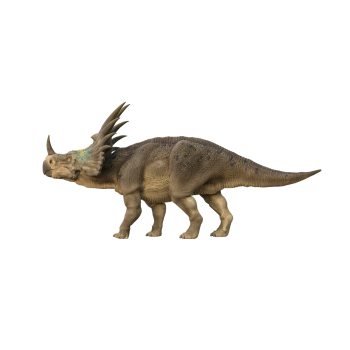
Halbersaurus 3D Model Animation
It is a dinosaur that lived in the late Jurassic period and belongs to the suborder Sauropod. Renowned for its enormous size and long neck, it was one of the largest land animals that ever existed on Earth. The skeletal structure suggests that they may be semi aquatic animals, living partially in water, which helps support their weight and reduce energy expenditure during exercise. The head is relatively small, with a long tail and strong limbs, with the forelimbs slightly longer than the hind limbs. Teeth have adapted to feed on plants, possibly relying on low vegetation as their main diet. Although the fossil record of Euphorbia is relatively limited, their existence provides us with important clues about ancient ecosystems.

Sword Dragon (with 3D animated model)
It is a dinosaur that lived during the Jurassic period, known for its unique large bony spines on its tail and spiny bone plates on its back. Relatively large in size, typically up to 9 meters in length and 4 meters in height. Jianlong is a herbivorous dinosaur that crawls on four legs, mainly supported by its forelimbs and propelled by its hind limbs. Its head is relatively small, and its jaw has teeth for cutting plants. The tail end has sharp spikes that may be used for self-defense. Fossils were first discovered in the 19th century and remain a hot topic of research for dinosaur enthusiasts and paleontologists to this day.
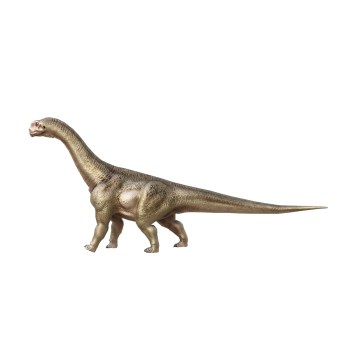
3D animated dome dragon model
It is a large herbivorous dinosaur from the Jurassic period. Living approximately 150 million years ago, mainly distributed in today's North America region. Known for its enormous size and unique skeletal structure, adult individuals can grow up to 20 to 30 meters in length and weigh up to 20 to 30 tons. The neck is very long, making it easy to forage for plants at high altitudes. The head is small with spoon shaped teeth, suitable for chewing hard plants. Belonging to the suborder Sauropod dinosaurs, it is one of the earlier members of this group. Strong limbs, adapted to walking on open plains. The tail is very long and may be used to maintain balance or as a defensive tool.

Fossil of triangular keel frame
Triceratops is a herbivorous dinosaur belonging to the family Ceratopsidae in the order Ornithischia. It is a dinosaur resembling a rhinoceros, with a bulky appearance, thick legs, three horns on the head, and a large bone plate extending backwards at the back of the skull to form a neck shield. There is a short horn above the beak and two long horns above the eye sockets. The horns of Triceratops are defensive weapons that can scare off predators. The tail is short and pointed, and the feet are like hooves. Distributed in North America, it lived in the late Cretaceous period, approximately 68 to 65 million years ago. Triceratops often take advantage of their clustered lifestyle to protect their young; When facing enemies, often bow down and use horns to resist predators.

Lianglong skull fossil
Lianglong is a dinosaur belonging to the family Lianglong in the order Saurischia. The neck is long, the head is small, and the position of the nostrils is higher than the eyes; The front of the mouth has flat teeth, while the sides and back have no teeth; Strong limbs, short forelimbs, long hind limbs; The buttocks are higher than the front shoulders; Each palm has 5 fingers (toes); The tail is longer than the neck and gradually narrows towards the end, forming a whip like shape, with over 10 human bones in the middle. The name Shuanglianglong comes from two protrusions that protrude from the top of the human character bone, resembling double beams, and is commonly referred to as Lianglong. Living in western North America during the late Jurassic period. Living in groups, when there is a shortage of local food, they collectively migrate to distant places. Plant eating, feeding on leaves and ferns.

Armored Dragon Skull Fossil
Hoplitosaurus, also known as Armored Dragon, is a genus of ankylosauria and a close relative of the spiny ankylosaurus. Living in the late Cretaceous period, which is 65 to 70 million years ago. The armored dragon is 7-10 meters long and weighs 7 tons. The appearance is very scary, it looks like a breathing armored vehicle. The head of the armored dragon is almost completely covered by the bone armor wrapped outside, and the back is also covered with large and small bone armor. These bone plates are very heavy, with each plate forming a pentagon and covering the entire body, playing an important protective role. Tetrapod dinosaurs mainly ate plants that were relatively short in stature.

Fossil skull of Brachiosaurus
Brachiosaurus is a general term for the "Brachiosaurus genus" dinosaurs of the Jurassic period. The body length is 25 meters, the height is 15 meters, the weight is 30 tons, the tail is thick and short, the head is small, the neck is long, and the appearance is similar to that of a giraffe; There are large claws on the inner side of the forefoot; The jaw is well-developed, with 52 teeth covering the upper and lower parts, and the edges of the teeth are sharp; Strong limbs; The nostrils grow on the top of the head. Named after its long forelimbs. The head is very small and it is a dinosaur with low intelligence. Living in North America during the late Jurassic period and North Africa during the early Cretaceous period. It inhabits grasslands filled with ferns, cycads, and wood thieves. Mild temperament, enjoys living in groups. Feed on leaves and tender branches. Often foraging together.
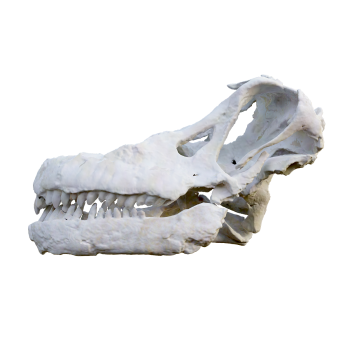
Argentine dragon head bone fossil
Argentinosaurus belongs to the Titanosaur class of sauropod dinosaurs, and its name is very simple, meaning a dinosaur discovered in Argentina. Survival period: 100 million years ago, mid Cretaceous Albian stage -93 million years ago, late Cretaceous Senonian stage. It is one of the largest land dinosaurs discovered. It is one of the largest animals that once roamed the earth, with a height of 12 meters and a length of 42 meters. Among all modern organisms, only the fragile double chambered dinosaur is longer than it. There are some other dinosaurs that are as long as the Argentinosaurus, and some that are taller than it. However, Argentinosaurus is still much heavier than other dinosaurs, possibly weighing up to 94 tons.

Dome shaped dinosaur skull fossil
Camarasaurus is an extinct sauropod dinosaur. It is the most common large sauropod dinosaur in North America, with an adult body size of about 20 meters long and a weight of 15-50 tons. Compared to other long necked dinosaurs, its neck is much shorter and its tail is also shorter, making its physique appear more robust and sturdy. It is one of the most famous dinosaurs in North America. The Latin meaning of its name is a dome shaped reptile. They belong to vegetarian dinosaurs and lived in the late Jurassic period, dating back 155 to 145 million years ago. Compared to other tall relatives in the sauropod family, the dome dragon appears relatively short.

Fossil skull of Protoceratops
Protoceratops, a ceratopsian dinosaur, lived in the late Cretaceous period (approximately 100-65 million years ago). It is a short legged quadruped animal with a body length of 2 meters and a weight of nearly 400 kilograms. The teeth are long and sharp. There are bony folds in the neck and large jaw muscles. May rely on palm leaves as a staple food. A quadrupedal dinosaur with a large head shield behind its head and no horns. Living in groups. They gave birth to small dinosaurs in their own nests. The heads of Protoceratops are of medium size, so they are relatively intelligent. It has a very similar appearance to the famous Triceratops, but is smaller in size and does not have long horns on its head.

Fossil skull of Heterodontosaurus
Heterodontosaurus, also known as Heterodontosaurus or Spinosaurus, is a carnivorous animal resembling a mammal that lived during the Permian period. Heterodontosaurus has a close relationship with mammals, but a distant relationship with dinosaurs, lizards, birds, etc. Its fossils are found in North America and Europe. Heterodontosaurus is a carnivorous ancient organism from the Permian period. The general public associates Heterodontosaurus with a dinosaur, but it is not actually a dinosaur. More precisely, they are classified as Panosauriformes. Although it resembles a lizard in appearance, Heterodontosaurus has a closer relationship with mammals and is farther away from true reptiles such as dinosaurs, lizards, birds, etc.

Triceratops fossil
Triceratops is a herbivorous dinosaur belonging to the family Ceratopsidae in the order Ornithischia. It is a dinosaur resembling a rhinoceros, with a bulky appearance, thick legs, three horns on the head, and a large bone plate extending backwards at the back of the skull to form a neck shield. There is a short horn above the beak and two long horns above the eye sockets. The horns of Triceratops are defensive weapons that can scare off predators. The tail is short and pointed, and the feet are like hooves. Distributed in North America, it lived in the late Cretaceous period, approximately 68 to 65 million years ago. Triceratops often take advantage of their clustered lifestyle to protect their young; When facing enemies, often bow down and use horns to resist predators.

Popular Models
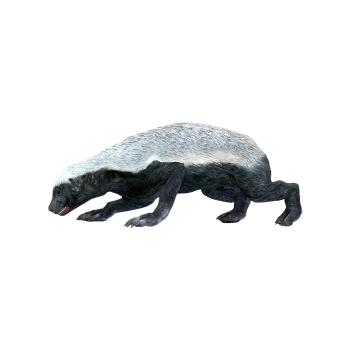
Honey Badger (3D animated model)
192 View
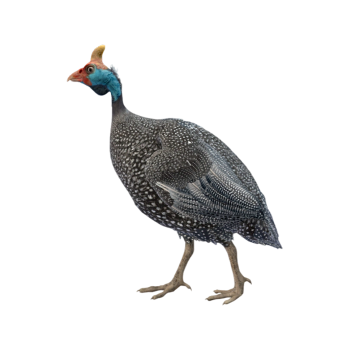
Guinea fowl (3D animated model)
163 View
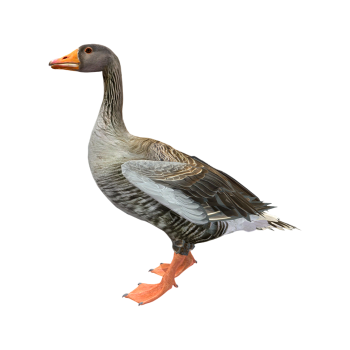
Wild Goose (3D animated model)
185 View
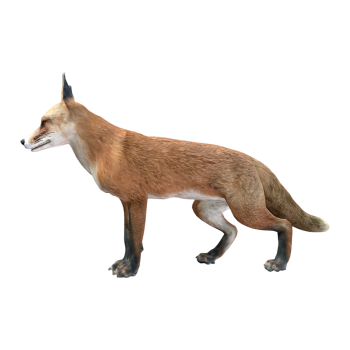
Red Fox (3D animated model)
153 View
Random Model

Hilly River Landscape
1365 View


Owl shaped lime jar
745 View

Double crowned Cormorant Skull
882 View

Double sofa
560 View

Macrophthalmus japonicus
751 View

The Holy Family Statue
950 View